
Advanced Treatments
Surgical Orthodontics
Surgical orthodontics, also known as orthognathic surgery, is a type of orthodontic treatment used to correct severe cases that include bad bites, jaw bone abnormalities, asymmetries, and malocclusion. Oral and maxillofacial surgery is one of the nine recognized dental specialties, and it focuses on treating complex craniofacial cases that involve the mouth, jaw, face, and skull. If you need surgical orthodontics, we will work with an oral and maxillofacial surgeon to ensure that you receive the best care possible.
When might surgical orthodontics be needed?
Surgical orthodontics may be used to treat adults with improper bites or other aesthetic concerns. In order to receive orthognathic surgery, the jaw must be done growing. The need for surgical orthodontics occurs when the jaws do not line up correctly, and a proper bite cannot be achieved with orthodontic treatment alone. Orthognathic surgery will help properly align the jaws, and orthodontic braces will move the teeth into their proper position.
How does orthognathic surgery work?
An oral and maxillofacial surgeon will perform your orthognathic surgery, and the surgery will take place in a hospital. Orthognathic surgery can take several hours depending on each individual case. Once the surgery is complete, you will have about a two-week rest period. Since orthognathic surgery is a major treatment, we recommend that you schedule some time away from work and school during the healing process. After your jaw has healed, your orthodontist will once again “fine-tune” your bite. After surgery, you will have to wear braces, and most braces are removed within 6 to 12 months following surgery. After your braces are removed, you will wear a retainer to help maintain your new smile.
Dentofacial Orthopedics
You may have noticed that Dr. Friedman and Dr. Aronson specialize in “orthodontics and dentofacial orthopedics.” While most people are familiar with orthodontics, many are unsure what the dentofacial orthopedics part of the title means.
Every orthodontist completes dental school. Upon graduation, some dentists go into practice as general dentists. Others choose to pursue a specialty, which requires additional full-time schooling during a 2- to 3-year residency program. There are nine specialties recognized by the American Dental Association. Some you are likely familiar with: pediatric dentistry (dentistry for children), periodontics (dentistry focusing on treating gum disease), and oral surgery.
“Orthodontics and dentofacial orthopedics” is one of the nine specialties. While orthodontics entails the management of tooth movement, dentofacial orthopedics involves the guidance of facial growth and development, which occurs largely during childhood. Appliances are frequently used to address aberrant facial patterns — appliances like protraction-headgear, expanders, and braces. Sometimes orthopedic treatment may precede conventional braces, but often the two are used at the same time.
Being skilled in both areas, Dr. Friedman and Dr. Aronson are able to diagnose misalignments in the teeth and jaw as well as the facial structure and can devise a treatment plan that integrates both orthodontic and dentofacial orthopedic treatments.
Limited Orthodontic Treatment & Minor Tooth Movement
Some maloclussions are more simple to treat than others and do not require comprehensive orthodontic treatment. Patients in Southbury, Waterbury, and the surrounding areas who require less than 9 months of braces or Invisalign® treatment have options for shorter, less complex orthodontic treatment.
Common canditates for minor tooth movement treatment are adults who have stopped wearing their retainers or those who have that "one tooth" that bothers them when they smile. For these patients, if your orthodontist confirms your bite is healthy and that all that is needed is a minor cosmetic fix, a reduced treatment cost is available.
Can I have braces or Invisalign on just the top or the bottom?
Sometimes yes! Dr. Friedman and Dr. Aronson will evaluate your bite, skeletal structure, smile, crowding, and treatment goals and can determine if a single arch of treatment is a possibility. Your top and bottom teeth need to coordinate and it is important for your teeth to both look good and function well.
iTero® Element™

We Are a Digital Imaging Practice: Proud Owners of an iTero® Element™ Intraoral Scanner
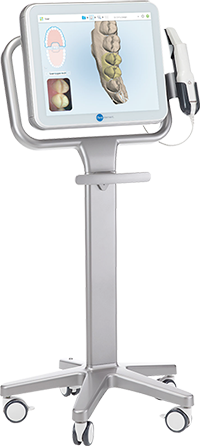
We'll Make a Great First Impression
The iTero Element Scanner is a state-of-the-art digital scanning system that reducces the need for unpleasant traditional alginate impressions—no more messy putty in your mouth! With our iTero Element Scanner, we can digitally capture a detailed, 3D model of your teeth and gums. Not only is an iTero Element digital scan more comfortable than the putty-based impressions, but it’s also faster and provides images that are more precise.
Say “goodbye” to the goop-filled impression trays!
- No goop or gag to worry about
- Fast, accurate scan for superior diagnostics
- Ideal for all types of braces, including Invisalign® clear aligners and retainers
- See a simulation of your potential post-treatment smile with the Invisalign Outcome Simulator (IOSim)
During the scanning process, your orthodontist will use the iTero Element Scanner’s wand to capture images of your teeth and gum tissue. You can breathe or swallow as you normally would. You can even pause during the process if you need to sneeze or just want to ask a question.
The iTero Element Scanner will give us a 3D model of your mouth that we can use with all orthodontic services, including the Invisalign Outcome Simulator, to show you what your new smile might look like.